Ashwagandha: who should and shouldn't take it (2026)

In April 2023, Denmark announced a ban on ashwagandha in food supplements, saying it was impossible to find a safe dose from the data available. Food safety bodies in several other European countries have since urged caution. The UK Food Standards Agency asked for evidence on its safety in the summer of 2024 and still hasn't published a verdict.
We sell an ashwagandha gummy, so we've read all of this closely. Here's where things stand, who should steer clear, and what the trials in people have found.
What the regulators are worried about
The concerns fall into four groups.
- Thyroid. Some studies and case reports link ashwagandha with raised thyroid hormone levels.
- Liver. There are a small number of published reports of liver injury in people taking ashwagandha supplements, usually starting a few weeks to a few months after they began. Most recovered after stopping.
- Pregnancy. Some traditional texts describe ashwagandha as able to bring on a miscarriage. Other readings of the same tradition say the opposite, and there are no good human studies either way. Regulators have taken the cautious view.
- Hormones and blood sugar. Ashwagandha may affect sex hormones and lower blood sugar, which matters for anyone on diabetes medication.
Where the UK review is up to
The Food Standards Agency ran a call for evidence from 8 July to 1 September 2024. It received 19 responses, mostly from supplement businesses and trade bodies, three from members of the public and one from university researchers. A summary of those responses was published on 25 June 2026.
The next step is a risk assessment by the Committee on Toxicity, an independent panel of experts that advises the FSA. Its findings will be published, then reviewed by all four UK nations before any rule changes. So far there is no official UK advice telling people to stop taking ashwagandha, and there are no UK limits on how much a product can contain.
We'll update this page when the Committee on Toxicity publishes.
Who should avoid ashwagandha
Based on the concerns above and standard clinical advice, we'd say skip it, or talk to your GP first, if any of these apply to you:
- You're pregnant, trying to get pregnant or breastfeeding.
- You have a thyroid condition, especially an overactive thyroid, or take thyroid medication.
- You have, or have had, liver disease or liver problems.
- You have an autoimmune condition such as rheumatoid arthritis, lupus, multiple sclerosis or type 1 diabetes. Ashwagandha may stimulate the immune system.
- You take medication for diabetes, blood pressure, anxiety, sleep, epilepsy or to suppress the immune system.
- You have a hormone sensitive condition, such as prostate cancer.
- You have surgery coming up. Stop at least two weeks before, because ashwagandha may add to the effects of anaesthetic and other medicines.
- You're under 18.
If you take it and notice yellowing of your skin or eyes, dark urine, pale stools, itching or unusual tiredness, stop straight away and speak to a doctor. Those can be signs of a liver problem.
What the human trials found
Ashwagandha is one of the most studied herbal supplements in the world, with several placebo controlled trials in people. Three are worth knowing.
| Study | Who took part | What they took | What they found |
|---|---|---|---|
| Chandrasekhar et al., Indian Journal of Psychological Medicine, 2012 | 64 adults with a history of chronic stress | 300mg root extract twice a day for 60 days | Lower scores on stress questionnaires than the placebo group. Blood cortisol fell by 27.9% |
| Langade et al., Cureus, 2019 | 60 adults with insomnia | 300mg root extract twice a day for 10 weeks | Fell asleep faster and rated their sleep quality higher than the placebo group |
| Cheah et al., PLOS One, 2021 | Five trials pooled, 400 adults | Various root extracts | A small but significant effect on overall sleep, stronger at 600mg a day or more and over eight weeks or more |
None of these trials reported serious side effects. They were also small and mostly ran for two to three months. Rare problems such as liver injury tend to show up in case reports, which is why the regulators are reading those alongside the trials.
How Kalma fits in
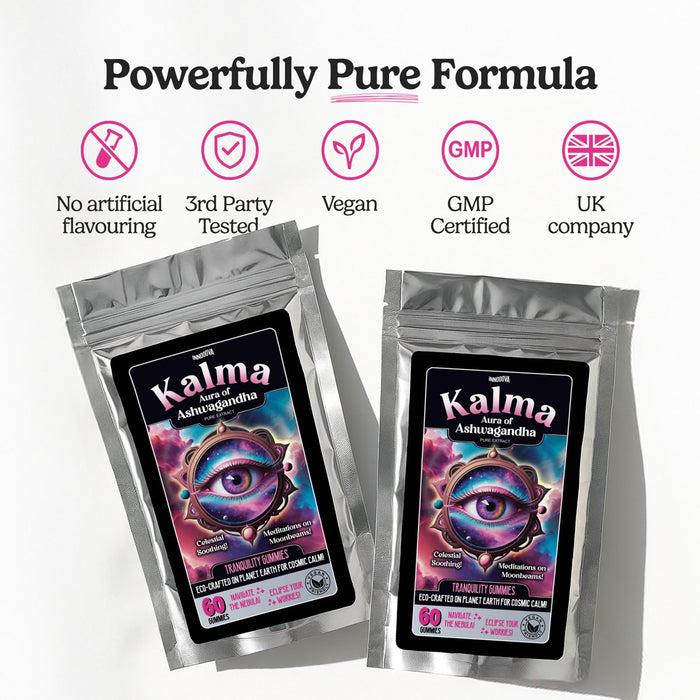
Kalma contains ashwagandha root extract, concentrated 10:1 and standardised to 5% withanolides, plus Vitamin B6. The trials above didn't test Kalma, and they used their own extracts at their own amounts.
Vitamin B6 is where we can make a health claim. It contributes to normal psychological function and to the reduction of tiredness and fatigue, both authorised in the UK. The pack and product page carry the warnings listed above.
Our view
We think ashwagandha is reasonable for most healthy adults who don't fall into the groups above, taken at normal amounts. We also think the regulators are right to look hard at it, and we're treating the question as open until the Committee on Toxicity reports. If their assessment changes what's safe to sell, we'll change Kalma.
If you're unsure whether it's right for you, your pharmacist is a good first stop. They can check it against anything else you take in a couple of minutes.
Sources
- Summary of responses to call for evidence on ashwagandha, Food Standards Agency, 25 June 2026
- Why did Denmark ban ashwagandha?, McGill Office for Science and Society
- Chandrasekhar et al., Indian Journal of Psychological Medicine, 2012
- Langade et al., Cureus, 2019
- Cheah et al., PLOS One, 2021
- Great Britain nutrition and health claims register, GOV.UK